The skin has a reputation for being the organ that protects us from the outside world. Much less often, however, do we talk about the fact that it frequently reveals what is happening in our inner world.
Sometimes it appears as a blemish that shows up right before an important event, or rosacea that suddenly flares after several weeks of tension. At other times, the skin becomes drier, more sensitive, and more reactive than usual, or simply loses its glow and starts to look tired, even when we use the same products and follow the same skincare routine.
Although we often say that “stress showed up on our face,” there is far more science behind that statement than we might assume.
Skin and the Nervous System: Close Relatives
At first glance, the brain and the skin seem like two completely different systems. However, during embryonic development, both originate from the same layer of cells known as the ectoderm. In other words, the skin and the nervous system share the same roots.
Perhaps that is why they continue to have such intense conversations even today. When the nervous system responds to stress, the skin very often receives the message.
What Happens When We Are Under Stress?
When the brain perceives that we are facing a challenging situation, the so-called HPA axis (hypothalamic-pituitary-adrenal axis) is activated. The result is an increased release of stress hormones, primarily cortisol.
In the short term, this is beneficial. Cortisol helps us stay alert, focused, and ready to respond to challenges. The problem begins when stress becomes a daily condition rather than a temporary reaction. At that point, the body starts functioning as though danger is constantly present.
How Does Cortisol Affect the Skin?
Elevated cortisol levels can stimulate increased sebum production, weaken the skin’s protective barrier, and slow down regenerative processes. At the same time, they can contribute to a more intense inflammatory response, making the skin more sensitive, reactive, and susceptible to various changes.
As a result, people experiencing prolonged stress may notice the appearance or worsening of acne, rosacea, eczema, and psoriasis, increased redness, itching, greater skin sensitivity, dryness, slower regeneration and wound healing, as well as more intense allergic reactions.
In other words, the skin does not respond only to what we put on it. It also responds to what we are going through.
Inflammation: The Common Denominator
Prolonged stress affects more than just our emotions. It can stimulate the production of inflammatory mediators such as cytokines, which play a role in communication between the immune and nervous systems.
When these processes continue for months, the skin often becomes one of the places where this internal imbalance is most easily noticed. That is why skin concerns sometimes represent much more than an aesthetic issue. They may be a signal that the body is trying to get our attention.
How Can Aromatherapy Provide Support?
Aromatherapy cannot remove every source of stress from our lives. Unfortunately, there is still no essential oil that answers emails, completes tax returns, or resolves family disagreements.
However, we do have a number of essential oils that can support the nervous system and help the body more easily move out of a constant state of alertness.
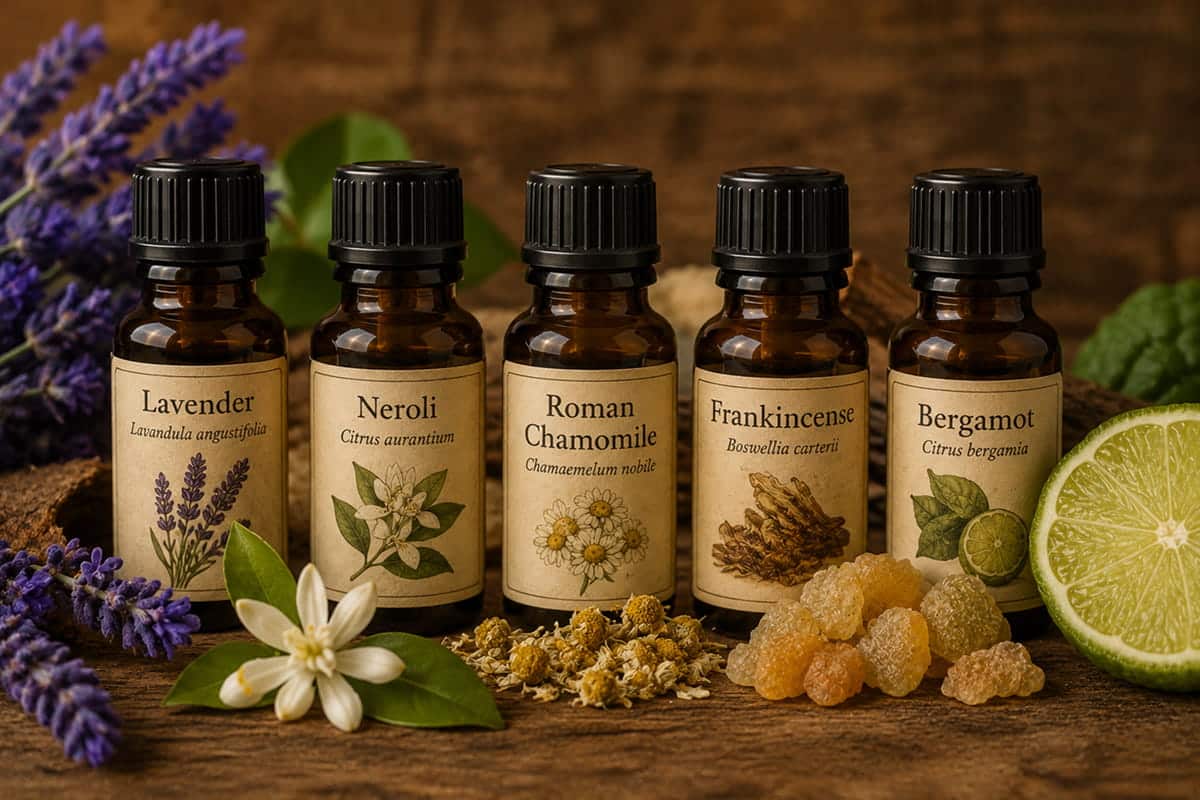
Lavender (Lavandula angustifolia)
Lavender is one of the most extensively researched essential oils for stress, anxiety, and sleep quality. Its primary constituents, linalool and linalyl acetate, are associated with calming effects on the nervous system, which is why it is often used as support during periods of emotional strain and prolonged stress.
Neroli (Citrus aurantium var. amara)
Neroli has traditionally been used to provide emotional support during periods of intense stress, exhaustion, and nervous tension. Its primary constituents include linalool, linalyl acetate, and limonene, compounds associated with calming effects on the nervous system. It is particularly valuable in situations where prolonged tension leads to emotional exhaustion, feelings of overwhelm, or inner restlessness. Thanks to its delicate yet deeply soothing aroma, Neroli is often used to help the body move out of a constant state of alertness and restore a sense of safety, calm, and emotional balance.
Roman Chamomile (Chamaemelum nobile)
Roman Chamomile is rich in esters, particularly isobutyl angelate, isoamyl angelate, and 2-methylbutyl angelate, compounds associated with calming and antispasmodic effects. Because of its chemical composition, it is often used as support during periods when stress is accompanied by irritability, emotional sensitivity, or a feeling of inner tension.
Frankincense (Boswellia sacra)
Frankincense has been used for centuries during moments when it is necessary to quiet the internal noise and restore a sense of calm. Its chemical composition includes compounds such as α-pinene, limonene, and sabinene, which have been the subject of numerous studies because of their influence on the nervous system and emotional balance.
Unlike oils that are primarily relaxing, Frankincense often helps create a sense of presence, calmness, and mental clarity. For this reason, it is frequently used during periods of chronic stress, emotional exhaustion, and overwhelm, when the body struggles to find its way back to balance.
Bergamot (Citrus bergamia)
Bergamot is one of the most extensively researched citrus oils when it comes to stress and emotional wellbeing. Its primary constituents include limonene, linalyl acetate, and linalool, compounds associated with nervous system support and the regulation of the stress response.
Unlike many citrus oils that are primarily linked with energy and alertness, Bergamot can simultaneously promote a sense of calm and emotional stability. For this reason, it is often used during periods of mental overload, tension, and emotional exhaustion.
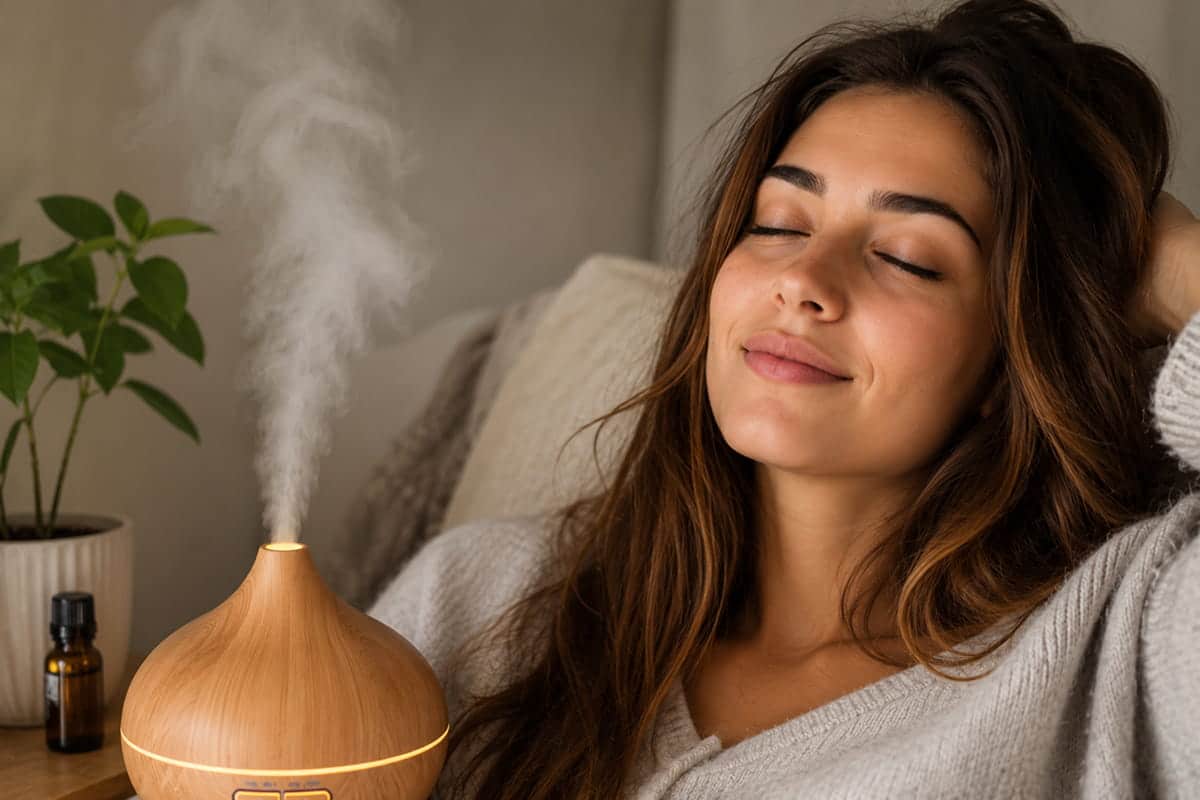
A Simple Aromatic Ritual for Days When Stress Decides to Show Up on Your Face
Add the following to your diffuser:
- 2 drops Lavender
- 2 drops Frankincense
- 2 drops Bergamot
Sit quietly for ten minutes. Do not analyze your skin. Do not look in the mirror. Just breathe.
Sometimes it is the nervous system that needs support first, so that the skin can do what it does best – return to balance.
Conversations We Cannot Hear
The skin and the nervous system communicate far more often than we realize. When stress lasts too long, that conversation sometimes becomes visible.
On the forehead.
On the cheeks.
On the chin.
The easiest thing to notice is what we see in the mirror – but the skin is often not the source of the problem; it is the messenger. The skin becomes the visible canvas for what has been unfolding behind the scenes, trying to draw attention to a conversation that the nervous and immune systems may have been having for months.
That is why the answer is not always found in yet another serum or cream, but in a much more important question: what is actually weighing on me so heavily?
When we find the answer to that question, much more than the appearance of our skin often begins to change. The way we cope with stress, care for ourselves, and recognize and respect our own boundaries begins to change. And ultimately, that is what matters most.