There are times when the body does not create drama. It does not turn on sirens, wave red flags, or send a notification with the title: “Dear Sir/Madam, we would like to inform you that something is wrong.”
More often, it does something much subtler.
It begins to whisper.
One day we feel unexplained fatigue. The following week, sleep no longer feels particularly restorative. Suddenly, the skin decides to live a life of its own, concentration behaves like a tourist without a map, and the body starts to feel unusually heavy and sluggish.
At that point, we usually think:
“Maybe I need more sleep.”
“I’m probably stressed.”
“I can’t wait for my vacation.”
Sometimes, that really is the answer.
But it may also be that the body is trying to say something else: that a silent inflammatory process is taking place in the background.
What Exactly Are Silent Inflammatory Processes?
When we hear the word inflammation, most of us imagine something obvious: redness, pain, fever, swelling. However, silent inflammatory processes do not manifest in that way.
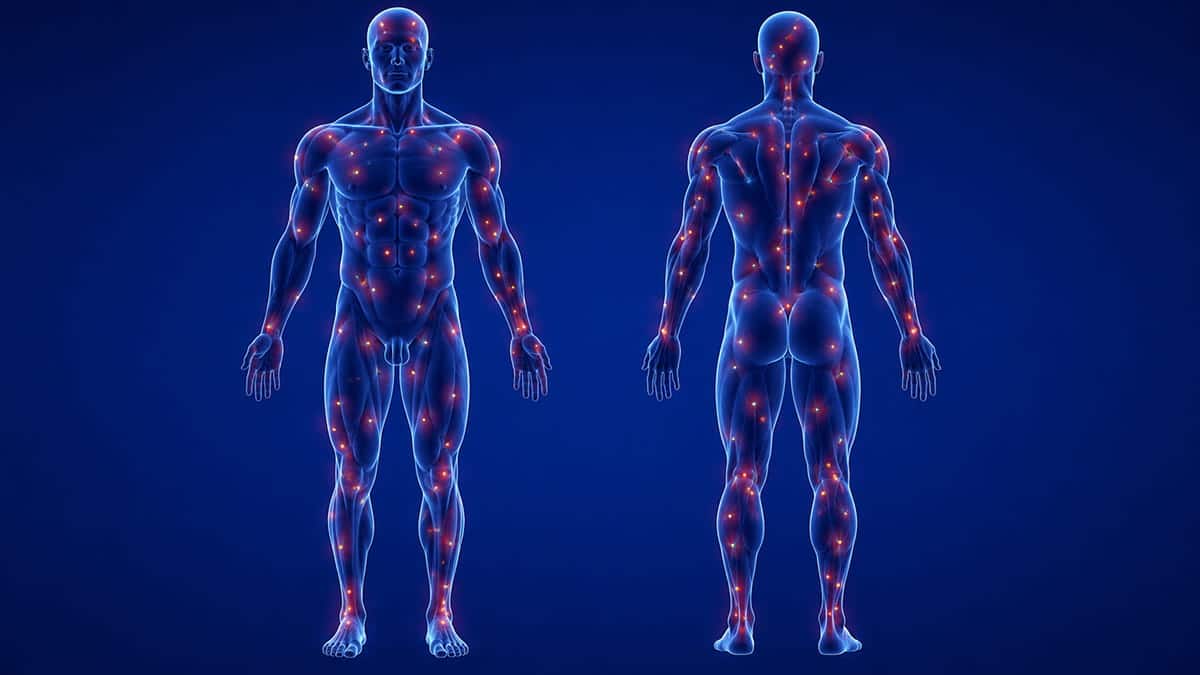
Low-grade or chronic inflammation represents a prolonged, quiet response of the body that can last for weeks, months, or even years. It is not intense enough to leave us bedridden, but it can be persistent enough for the body to gradually begin experiencing the consequences – like a small spark that does not start a fire, yet continues to smolder beneath the surface long enough to constantly consume the body’s energy, while trying to keep things under control.
These mild yet long-lasting immune responses exhaust the body and, over time, contribute to tissue damage and serious health conditions.
How Does the Body Whisper?
The body usually does not sound the alarm at the first signs of imbalance. Instead, it often sends small signals that can easily be attributed to everyday fatigue or stress.
Some of these signals include chronic fatigue and low energy, brain fog, difficulty concentrating, poor sleep quality, a feeling of heaviness in the body, occasional muscle or joint discomfort, skin issues, unexplained weight gain, or digestive disturbances.
Of course, these symptoms can have many different causes and do not automatically mean that inflammatory processes are present in the body.
However, they certainly serve as an invitation to listen a little more closely to what the body may be trying to say.

Why Do Silent Inflammatory Processes Develop?
The body does not initiate an inflammatory response without a reason. Acute inflammation is actually an important protective mechanism because it helps the body respond to injuries, infections, and other challenges.
The problem begins when the body receives signals for months or even years that it needs to remain in a constant state of alert – and modern lifestyle does a remarkably good job of making that happen.
Some of the factors that may contribute to silent inflammatory processes include:
- prolonged psychological stress
- lack of quality sleep
- a diet rich in highly processed foods and sugars
- gut microbiome imbalance
- insufficient physical activity
- smoking and excessive alcohol consumption
- long-term exposure to certain environmental toxins
Most often, there is not one major cause. Instead, it is usually a series of small things repeated day after day.
A poorly slept night.
A stressful week at work before an annual report deadline.
A quick meal squeezed in between meetings.
Another cup of coffee instead of a walk in fresh air.
Individually, these things may not seem dramatic. However, when repeated long enough, the body may begin using more and more energy simply trying to maintain balance.
Stress and Inflammatory Processes: A Conversation Happening 24 Hours a Day
Stress is not just an event. It is also biochemistry.
When we experience prolonged stress, the body produces hormones such as cortisol and adrenaline. In the short term, they are our allies. The problem begins when the body starts living in a mode of: “Urgent! Important! Fast!”
Long-term activation of the stress response can lead the body to redirect energy toward functions it considers essential for immediate survival, while processes such as tissue regeneration, healthy digestion, balanced immune function, and normal recovery mechanisms become less of a priority.
As a result, inflammatory processes may begin quietly smoldering within the body, forcing it to work overtime in an attempt to keep them under control.
And naturally, the body is not particularly happy about working overtime for months at a time.
How Can Aromatherapy Provide Support?
In addition to providing valuable support through its effects on stress, sleep quality, emotional wellbeing, and overall physiological balance, aromatherapy also offers practical solutions through essential oils with strong anti-inflammatory properties.
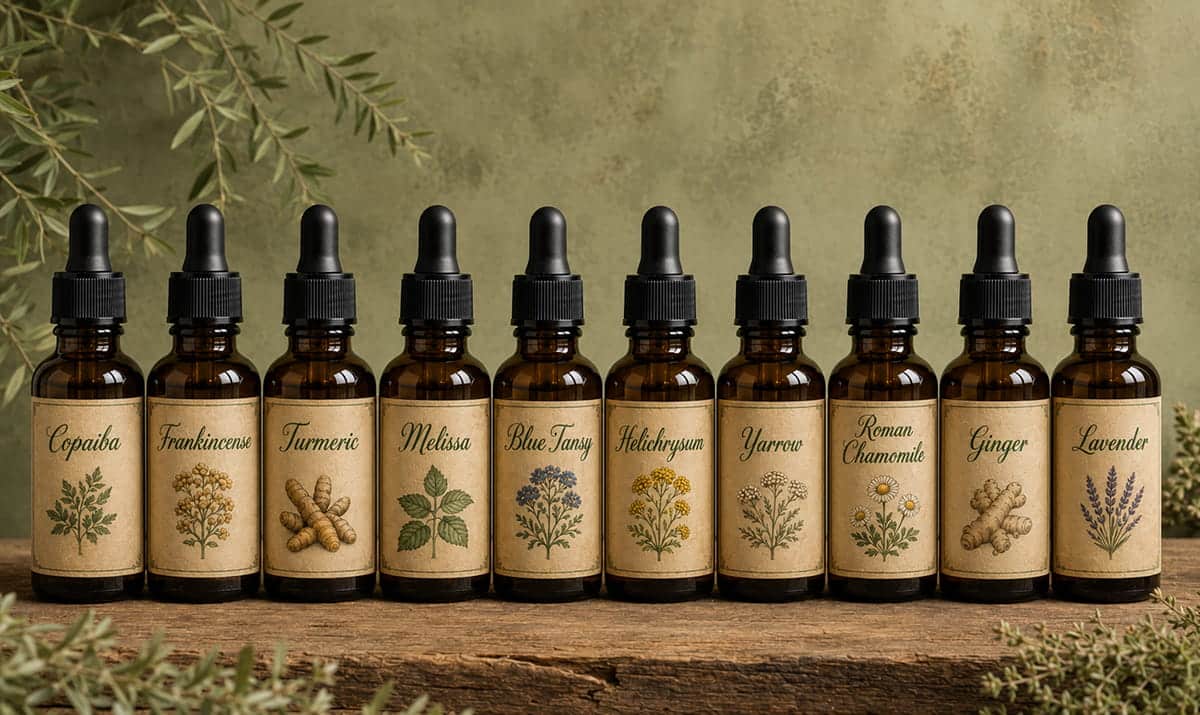
Copaiba (Copaifera officinalis)
Copaiba is rich in β-caryophyllene, a compound that functions as a selective CB2 receptor agonist. In other words, it acts like a precisely targeted key that activates receptors involved in the regulation of inflammation and immune responses, without the psychoactive effects associated with CB1 receptors.
Turmeric (Curcuma longa)
Turmeric essential oil owes its properties largely to a group of compounds known as turmerones. Among them, ar-turmerone stands out in particular, as research suggests it may influence key signaling pathways involved in inflammation. Put simply, it acts like a regulator that can “turn down the volume” on excessive inflammatory signals and reduce the production of inflammatory molecules associated with swelling, discomfort, and tissue damage.
Frankincense (Boswellia sacra)
The activity of Frankincense essential oil is associated with volatile compounds such as α-pinene, limonene, and sabinene. Of particular interest is α-pinene, which research suggests may influence mechanisms involved in the regulation of inflammatory responses. Studies also indicate that it may affect the activity of certain enzymes associated with inflammatory processes, potentially contributing to a reduction in inflammation within the body.
Melissa (Melissa officinalis)
Melissa is rich in aldehydes, particularly citral, along with its isomers geranial and neral. Citral has been studied for its anti-inflammatory, antimicrobial, and antioxidant properties, while research suggests that it may influence inflammatory mediators and local inflammatory processes. Melissa becomes particularly interesting when inflammation goes hand in hand with nervous tension.
Blue Tansy (Tanacetum annuum)
Blue Tansy owes its distinctive blue color to chamazulene, a compound formed during distillation from precursors naturally present in the plant. Chamazulene and other compounds such as sabinene, camphor, and myrcene have been associated with anti-inflammatory, antioxidant, and tissue-soothing effects. This oil is particularly interesting in reactive skin conditions and situations involving an exaggerated response within the body.
Helichrysum (Helichrysum italicum)
Helichrysum is considered one of the most valued oils when it comes to tissue regeneration. Its profile often includes neryl acetate, γ-curcumene, α-pinene, and italidiones. Italidiones are particularly interesting in the context of skin health and tissue recovery, while neryl acetate contributes to the oil’s soothing and regenerative profile.
Yarrow (Achillea millefolium)
Yarrow may contain chamazulene, along with compounds such as 1,8-cineole, camphor, borneol, α-pinene, and β-pinene, depending on the chemotype and origin of the plant. Research associates these compounds with anti-inflammatory and antioxidant effects. Some are believed to influence processes involved in the production of prostaglandins, molecules that play an important role in inflammation, pain, and swelling.
Roman Chamomile (Chamaemelum nobile)
Roman Chamomile is rich in esters, particularly isobutyl angelate and 2-methylbutyl angelate, which contribute to its characteristic calming and antispasmodic profile. Research suggests that Roman Chamomile may support the regulation of immune responses and help calm inflammatory processes within the body. Its activity has also been associated with antioxidant effects that may help protect cells from oxidative stress.
Ginger (Zingiber officinale)
Ginger has attracted attention due to compounds such as zingiberene, β-sesquiphellandrene, ar-curcumene, and β-bisabolene. Research suggests that these compounds may influence mechanisms involved in regulating inflammatory responses and reduce the production of molecules associated with inflammatory processes. In addition, Ginger is often linked with digestive support, which becomes particularly interesting given the growing focus on the relationship between the gut, inflammation, and the nervous system.
Lavender (Lavandula angustifolia)
The main components of Lavender, such as linalool and linalyl acetate, have attracted researchers’ attention because of their potential influence on the nervous system, inflammatory processes, and oxidative stress. Interestingly, Lavender may provide support on two levels – through its effects on inflammation-related processes, but also indirectly through stress reduction and improved sleep quality, factors that may contribute to the maintenance of chronic inflammatory processes.
A Small Aromatic Ritual for Days When the Body Whispers
Before deciding to systematically and proactively incorporate anti-inflammatory essential oils into your routine, start with a simple evening ritual:
Add to your diffuser:
- 2 drops Lavender
- 2 drops Frankincense
- 1 drop Ginger
Then do something that sounds almost revolutionary these days:
Sit for 10 minutes and do absolutely nothing. No phone. No scrolling. No responding to messages that begin with: “Just one quick question…”
The body rarely stays silent – we simply often fail to hear it in time. And we have become remarkably good at interrupting it.
Another coffee to push through fatigue. Another item on a never-ending to-do list. Another sleepless night with the phrase: “I just need to finish this.”
There is no need to wait for the body to start screaming. We simply need to pause and listen long enough to hear the whisper.